


TOPICS
Requirements for Exporting Used Agricultural Machinery: What Is a Phytosanitary Certificate?
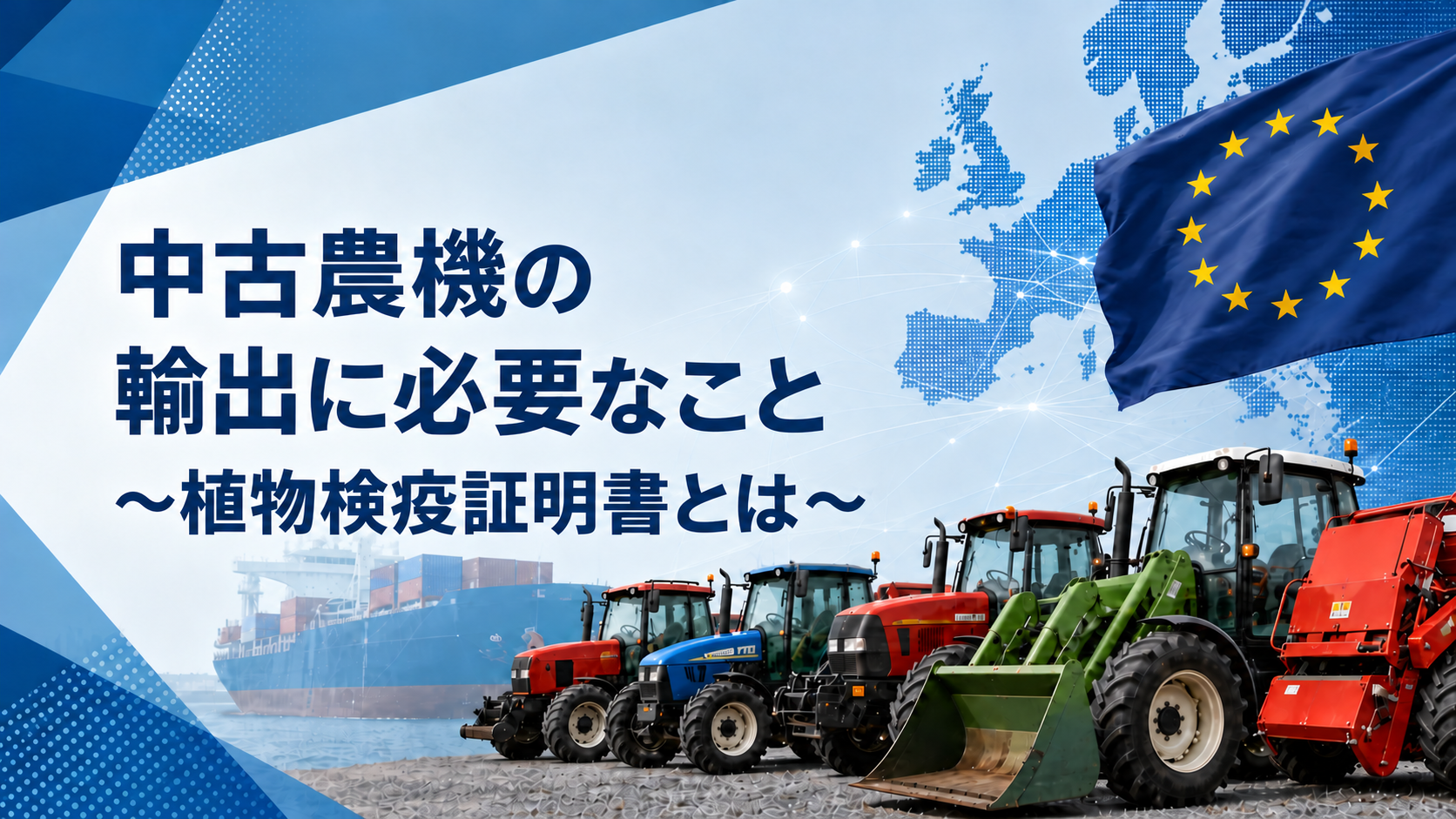
When exporting used agricultural machinery to the EU, strict phytosanitary measures must be followed to prevent the introduction of pests, diseases, and soil.
In particular, any soil or plant debris adhering to the equipment is considered a risk, so thorough cleaning, inspection, and preparation of documentation prior to export are essential.
- “I want to export used agricultural machinery to the EU, but I don’t know where to start.”
- “I’d like to consult on everything from cleaning and inspection to obtaining certificates”
- “I’d like to arrange everything—from container loading to port delivery—all at once.”
What You'll Learn in This Article
- Why a “Phytosanitary Certificate” Is Required for Exporting Used Agricultural Machinery to the EU
- Before Exporting, It’s Not Just About “Obtaining Certificates”—“Cleaning” Is Also Crucial
- The Process for Exporting Used Agricultural Machinery to the EU
- Obtaining a Phytosanitary Certificate and Managing the Shipping Schedule
- Arai Logistics’ Support for Exporting Used Agricultural Machinery
- Frequently Asked Questions
1. Why a Phytosanitary Certificate Is Required
When exporting used agricultural machinery (tractors, combine harvesters, etc.) to the EU, a “Phytosanitary Certificate” is required.
A phytosanitary certificate is a document that certifies that the exported goods meet the importing country’s phytosanitary requirements. In Japan, it is issued after the goods undergo an inspection by the Plant Protection Station and are confirmed to meet the required conditions.
Since the import of soil is prohibited in the EU, used agricultural machinery that has been used on farmland or similar areas must be exported only after all soil and plant residues have been removed.
Key Steps Required for Exports to the EU
- Removal of soil and plant debris adhering to used agricultural machinery
- Export inspection by the Plant Protection Station or similar authority
- Application for issuance of a Phytosanitary Certificate
- Export within 14 days of certificate issuance
2. Why Cleaning Matters Before Export
When exporting used agricultural machinery to the EU, the focus tends to be on obtaining a phytosanitary certificate; however, the cleaning process—which precedes this step—is actually extremely important.
Even if you wash only the surface, soil and mud may remain in the following areas:
- Around tires and tracks
- The connection points between the axles and tires
- The underside of the machine
- Around the engine compartment
- Around the driver's seat and steps
- Gaps where mud and plant debris can easily get trapped
Caked-on dirt may not be completely removed by high-pressure washing alone. Depending on the condition of the machine, use a scraper or brush to remove it.
POINT
To prevent soil and other debris from reattaching after cleaning, care must be taken regarding both the cleaning area and the storage location.Before proceeding with certification procedures, it is important to “clean the machinery to a condition suitable for inspection.”
3. Process for Exporting Used Agricultural Machinery to the EU
The necessary steps vary depending on the type of machinery, storage location, destination country, and shipping schedule.
Generally, the process proceeds as follows.
STEP 1: Confirm Export Conditions
First, confirm the type and number of agricultural machines to be exported, their current location, destination country, port of destination, and desired export date.
At the same time, determine whether the machines are subject to plant quarantine and what preparations are necessary.
STEP 2: Verify Product Information
Verify the manufacturer, model, size, weight, condition, and photos of the machinery.
Organizing this information in advance is crucial for determining the mode of transport, whether the machinery can be loaded into a container, and how to proceed with cleaning and inspection.
STEP 3: Transport and Delivery to the Yard
Deliver the used agricultural machinery to be exported to the yard where cleaning, inspection, and container loading will take place.
In some cases, transport from the auction site to the yard may be necessary.
STEP 4: Preparation for Cleaning and Inspection
Remove any soil or plant debris adhering to the agricultural machinery.
If necessary, prepare photographs showing the condition of the machinery after cleaning, as well as any information required for the inspection.
STEP 5: Application for Plant Quarantine and Export Inspection
Submit the necessary applications for the export inspection and undergo the inspection conducted by the Plant Protection Station or a registered inspection agency.
For used agricultural machinery, the inspection primarily consists of a visual inspection to check for the presence of soil or plant debris.
STEP 6: Container Loading and Issuance of the Phytosanitary Certificate
After passing the export inspection, load the used agricultural machinery into a container.
Next, submit an application with the required information—such as vessel details and container number—to receive the phytosanitary certificate.
The certificate states that the used agricultural machinery in question has been cleaned and is free of soil or other contaminants.
STEP 7: Container Loading, Transport to the Port, and Shipment
The container is then transported to the port, where export-related procedures and shipment are carried out.
4. Phytosanitary Certificate and Shipping Schedule
For exports to the EU, the goods must be exported within 14 days of the issuance date of the phytosanitary certificate.
Therefore, rather than starting loading preparations only after obtaining the certificate, it is important to work backward from the scheduled departure date to coordinate the cleaning date, inspection date, container loading date, and delivery date to the port.
- Searching for shipping space after obtaining the certificate
- Arranging a container stuffing contractor after the inspection is complete
- The inspection date and the vessel’s scheduled departure date are significantly far apart
- Entrusting cleaning, inspection, and loading to separate contractors
If there are changes to the departure schedule, delays in delivery to the port, or incomplete documentation, re-inspections or rescheduling may be required.
It is important to manage the entire process—from plant quarantine to loading—as a single, integrated workflow.
5. Arai Logistics’ Export Support
Arai Logistics provides comprehensive support for all aspects ofexporting used agricultural machinery to the EU.
We offer end-to-end services, including plant quarantine compliance, cleaning, obtaining certificates, container loading, and shipment.
Service Locations: Miyagi Container Yard, Saitama Container Yard
- Preliminary Confirmation for Plant Quarantine
- Arrangements for Cleaning and Inspection
- Support for Obtaining Phytosanitary Certificates
- Container Loading
- Delivery to the Port
- Preparation of Shipping Documents
“I want to export used agricultural machinery to the EU”
“I’d like to confirm whether a phytosanitary certificate is required”
“I’d like to consult on exporting agricultural machinery I won at an auction”
If your company falls into any of these categories, please feel free to contact us.
6. Frequently Asked Questions
Q. Can I request assistance for used agricultural machinery that I did not win at Arai Auction?
A. Yes. You can consult with us regarding used agricultural machinery purchased from other auctions or business partners as well.
Q. Can I request a phytosanitary certificate only?
A. Obtaining a phytosanitary certificate requires cleaning the machinery and preparing for export inspection. Please consult with us regarding the condition of the machinery, its storage location, and scheduled shipment details.
Q. Dousedconstruction and heavy machinery also require a phytosanitary certificate?
A. A phytosanitary certificate is required for the export of used agricultural machinery to the EU. For construction and heavy machinery, individual confirmation is required based on the type of machinery, usage history, presence of soil, and the destination country’s requirements.
Q. What information should I provide when making an inquiry?
A. Please have the following information ready to ensure a smooth confirmation process.
- Type of machine, manufacturer, and model number
- Number of units, size, and weight
- Current storage location
- Destination country and port
- Desired Export Date
- Product details and photos
EU Export & Phytosanitary Certificate Inquiries
“I want to export used agricultural machinery to the EU.”
“I’d like to confirm whether a phytosanitary certificate is required.”
“I’d like to consult about exporting agricultural machinery purchased at an auction.”